Monday, January 3, 2011

trying to find my inspiration

I'm finding it completely overwhelming to redesign 3 acres of poorly created gardens.  Where to start, what can I save and salvage, just how much money am I going to spend on new plants, and exactly how many seeds do I need to start in a few weeks.  And mostly, how am I going to get all the work done by myself, and take care of my kids, work a little, blog, and maybe have a bit of fun.

Then, while I was digging through some old photos to find a picture for Saturday's post I found these.
Nice pavement, huh? and lingering snow, this was March
Excuse me, you want to put a garden where?
Transformed!  Oh wait, I designed this space, and all the gardens.  (please note I did not design adding an ugly plastic garbage can and metal picnic tables, the one's I selected were gorgeous, even the garbage can, but there was not enough money left!)
I guess I am up to the task of redesigning my space.  I think I can... I think I can...


Saturday, January 1, 2011

It's the most wonderful time of the year...

And I'm not talking about Christmas, or September when the kids go back to school... it's seed/plant catalog time!!

As soon as the ridiculous number of catalogs from Pottery Barn, LL Bean and the like finally subside in the post holiday slump, the garden porn starts to roll in.  And let me assure you there are some catalogs that are so beautiful they can convince you can grow anything.  One in particular, which I won't call out by name, but happens to be in my home state of Connecticut is very good at it, my gardening friends will know who I mean.... but I digress.

For any serious gardener the planning begins now, in the dead of winter.  Seeds need to be ordered if you want specific types for your vegetable or ornamental garden from a reputable company (see here for comprehensive reviews, I use this religiously).  Order too little and you may be out of luck for your late summer/early fall sowing of cool weather crops.  Order too much and you may waste a bunch of money (although if you've ordered from a reputable company the seeds should last til next season).  My challenge this year is I've increased the size of my vegetable garden by about 300%.  So I'm planning, drawing, counting, measuring, okay not totally true.  I should be doing all those things, however as usual I'm going to just fly by the seat of my pants with a rudimentary, not to scale drawing plan, order, and keep my fingers crossed.

My favorite seed catalog of all time is Johnny's Selected Seeds of Maine.  It's not that they have the most unusual varieties (I order those from Baker Creek Heirloom Seed, which now bought a CT Seed company and will available locally, woo hoo!) but they have a ridiculously high germination rate.  In addition their catalog has the most comprehensive seed starting, transplanting and harvesting information for every single fruit, vegetable and flower that they sell.  It's literally my bible for the whole growing season.  In the last few years they've also upped their offerings in the organic seed department.  So the next few days I'll be pouring over their catalog, along with a few others to try and decide which of the 500 varieties of tomatoes I want to try this year, and which of the 200 varieties of cucumbers will make the best pickles.  And I'm hoping to find the magic unknown vegetable that must bet out there somewhere that my youngest child will actually like and eat without a bribe.


Ox-heart heirloom tomato - definitely making the cut again this year.

Wednesday, December 22, 2010

how green is your Christmas tree?

I know, why is a nice Jewish girl like me blogging about Christmas trees? An interesting article in last week's New York Times caught my eye and investigates this question.   Living in a small town, where agriculture and related business are pretty much the only game in town - I've been hearing lots about this lately.  Our town might possibly have the highest number of Christmas tree farms per capita in the state.  I don't know that for sure, I'm totally guessing but just drive down the one major state road here and you'll see signs up for at least a dozen.  So I guess the answer is, if you live here (or near a Christmas tree farm) the answer is a real tree is more environmentally friendly.  If you live in Hawaii the answer is a fake tree - and really if you live in Hawaii, I don't feel bad for you at all (it's been in the 20's here most of the week).


video via Kitchen Gardeners International

Wednesday, December 15, 2010

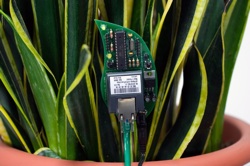
Just in case you felt like buying me a holiday gift....

I'm totally kidding by the way.
It's called Botanicalls... and it will Tweet you when your plants need to be watered.  On a side note, is "tweet you" correct?  I can't seem to understand Twitter, even though my brother and others have explained it to me many times.  Regardless - clearly we as a human race are not smart enough to stick our finger in the pot and see if the soil is moist or not.  Okay, maybe I shouldn't make that assumption.

I'm a notorious hater of house plants*.  This doesn't make sense to most people as I love plants, right?  But I really, really detest them.  You will not find a single one in my house.   When someone brings me one, I end up killing them.  I stick them in a corner in the living room, or some other room where it looks nice and promptly forget about it.  Hey wait... maybe I do need this gadget?

*House plants does not include indoor forcing bulbs.  Which I love, you can bring me some any time!

Sunday, December 12, 2010

the future of farming?


Meet George Jetson, Jane his wife... Remember that old cartoon?  The early 60's vision of what life would be like in the future - including eating all meals that popped out in pill form from a contraption called the Food-A-Rac-A-Cycle. Feel like having turkey and mashed potatoes for dinner, just type it into the computer.  Tofu with roasted vegetables, oh wait... that didn't exist it the Jetson's utopia.

Two articles caught my eye this week regarding the future of food production in our world with rising population rates.  The first from The Economist, concerning growing plants hydroponically in a skyscraper like tower. Interesting, unlikely I think because of the sunlight issues mentioned within.  However towards the end of the article, they suggest the more practical solution of using the flat roofs of large retail buildings as growing space.  In the suburbs at least, imagine your average Whole Foods or regular supermarket for that matter growing food upstairs all year round.  One stop shopping for those who want to buy local, but find the time constraints of having to shop at both farm or farmers market and a supermarket difficult.  It's interesting to think about.

The second find regards the FoodTubes UK project.  An idea that has underground tubes propelling food and other goods around the UK (and eventually the world) at a significant reduction in cost and carbon emissions.  An idea that probably (at least it seems so to me) needs a lot more work, but at least someone is thinking.  Thinking about solutions that will ease the burden we are putting on the planet with our global need for stuff.  I have to say, this is an idea that really does sound like it came from Orbit City - maybe this was what Spacely's Space Sprockets were working on?

Sunday, December 5, 2010

garden writers get a shout out in the gray lady

From this Sunday's  New York Times Book Review

"Anyone insane enough to dig holes, pour money into the ground, wait to see what happens and then sit down at a computer to tell us about it has earned the right to a little respect."

Hmmmm.... I'm going to ponder this for a while today.

Here's the full list.

I'm particularly excited that this was included as one of the best of 2010. I couldn't agree more.


Missing from the list - a beautiful book and full of gardening lessons handed down through generations of a family.


Thursday, December 2, 2010

not really breaking news

Earlier this week, the Senate somewhat surprisingly passed the Food Safety and Modernization Act (S510) with the so-called Tester Amendment to protect small farmers from FDA scrutiny for the most part.  Those of us who've been following this bill on it's long journey rejoiced.  Unfortunately there is still a long way to go in terms of funding and one Constitutional screw up that needs to be sorted out.  This map shows the breakdown of how the votes went down.  Frankly, I'm still in shock that it passed by such a large margin considering all the lobbying that was going on at the last minute funded by Big Ag.

I've been trying to write a concise and informative blog post on this for several days now, but this blog post from the Connecticut chapter of the Northeast Organic Farming Association does a much better job than I ever could.

Living in an agricultural community, it was really important to me that the small farmers (according to the new amendment any farm with revenues less than $500,000 and who delivers only within 250 miles of the farm) be protected so that I can continue to buy my eggs locally and have no worries eating raw cookie dough.  I mean really people, priorities!